
Building Regulations & Fire Mist Systems: A Guide To Compliance for UK Homes
Fire safety is a fundamental consideration when designing, constructing or renovating a residential property.

UK Building Regulations set out requirements designed to protect occupants and provide appropriate measures for warning, escape and limiting the spread of fire. In England, Approved Document B (Fire Safety) provides statutory guidance on meeting the fire safety requirements of the Building Regulations.
For some buildings and circumstances, automatic fire suppression can form an important part of the overall fire safety strategy.
Fire mist systems provide one approach to automatic fire suppression, using finely atomised water droplets to help control or suppress a fire while limiting heat and smoke.
However, choosing an appropriate system isn't simply a case of installing a number of mist nozzles. The system needs to be appropriately designed, tested, installed, commissioned and maintained for the particular building and fire risks involved.
This guide explains what homeowners, architects, developers, and construction professionals need to know about fire safety compliance, building regulations, and fire mist systems.
What Is a Fire Mist System?
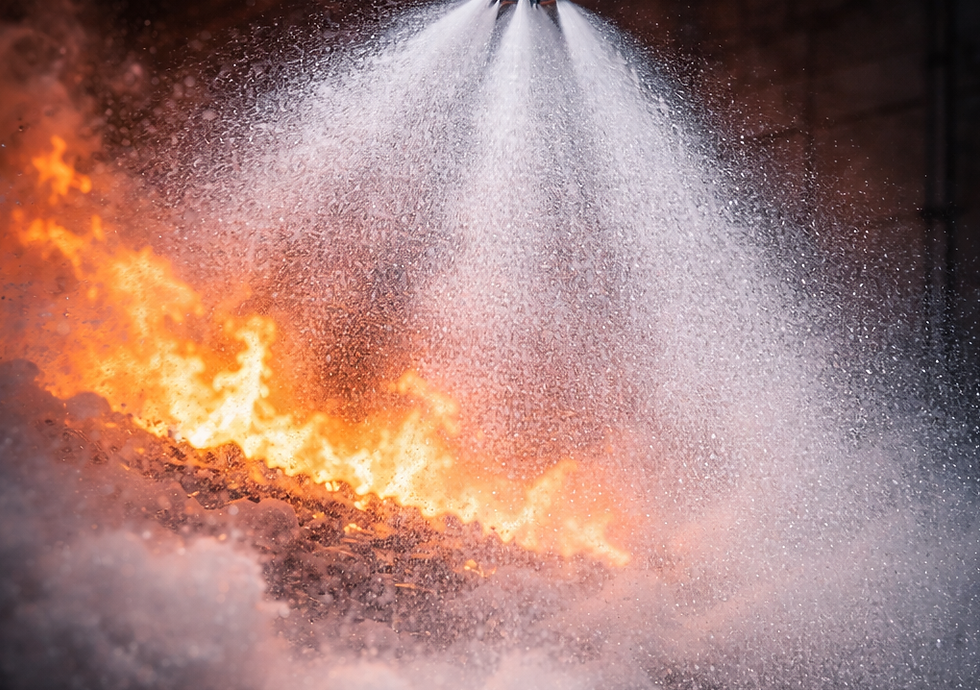
A fire mist system is an automatic fire suppression system that uses specially designed nozzles to discharge very small water droplets when a fire is detected.
The small droplets provide a large surface area for heat absorption, helping the system rapidly reduce temperatures around a developing fire.
Depending on the system and application, water mist can help to:
Absorb heat from a fire
Reduce temperatures
Control or suppress a developing fire
Limit the spread of fire
Help reduce heat and smoke
Provide additional protection for occupants
Reduce the amount of water required compared with some conventional suppression approaches
Water mist systems are performance-based, meaning their design must be supported by appropriate fire testing and evidence for the intended application. This makes the correct specification and design of the system an important part of fire compliance.
A fire mist system should therefore be considered as part of the property's wider fire safety strategy rather than as a standalone piece of equipment.
Fire Mist and UK Building Regulations
The Building Regulations set out requirements for building work in England, with Part B covering fire safety.
Approved Document B provides guidance relating to areas including:
Means of warning and escape
Internal fire spread
Structural fire protection
External fire spread
Access and facilities for the fire service
Approved Document B is divided into:
Volume 1 - Dwellings
Volume 2 - Buildings other than dwellings
What does this mean for fire compliance?
Building Regulations compliance is about the overall fire safety strategy, rather than simply whether a property has a fire suppression system.
Where automatic fire suppression forms part of that strategy, the system needs to be appropriately selected and designed for the particular building, occupancy and fire risks.
This is why fire suppression should be considered early in the design process, particularly for architects, developers and contractors working on new-build properties, conversions or more complex residential projects.
When Is Fire Suppression Required?
Whether automatic fire suppression is required, recommended or forms part of a proposed fire safety strategy depends on the individual building and the applicable requirements.
Factors such as the property's use, occupancy, height, layout, construction, escape arrangements and fire risks can all influence the approach.
The following are examples of situations where fire suppression may need to be considered:
Situation | What needs to be considered? |
New dwelling | Building Regulations Part B requirements and the applicable fire strategy |
Extension | Whether the building work affects existing fire safety provisions |
Loft conversion | Escape routes, compartmentation, detection and suppression considerations |
Conversion to flats | Compartmentation, escape and fire protection requirements |
HMO | Occupancy, fire strategy and applicable fire safety requirements |
Higher-risk residential building | More extensive fire safety requirements may apply |
Listed or heritage property | Alternative approaches may need to be considered where conventional solutions are difficult to implement |
Open-plan or unusual layouts | Fire engineering and suppression may become particularly relevant |
Refurbishment | Existing fire protection and the impact of the proposed work need to be assessed |
Importantly, there is no single fire suppression solution that is appropriate for every property. The system needs to be assessed against the individual building and its intended use.
Where Does Water Mist Fit Into Fire Compliance?
Automatic fire suppression can be part of a building's fire safety strategy, but the appropriate solution depends on the project's circumstances.
Approved Document B contains provisions relating to automatic fire suppression and references sprinkler systems and relevant standards in particular circumstances.
Water mist takes a more performance-based approach, meaning the suitability and performance of the proposed system need to be demonstrated for its intended application.
This is an important consideration when specifying a fire mist system.
A water mist system should not be specified simply because it uses less water or smaller infrastructure than a sprinkler system. Its suitability needs to be demonstrated for the intended building and application.
For architects and developers, this means considering fire suppression at the design stage rather than treating it as an equipment selection exercise at the end of a project.
Understanding the Standards
Standards Update: BS 8458 and BS EN 14972-17
Understanding the relevant standards is an important part of specifying a fire mist system and demonstrating appropriate fire compliance.
BS 8458:2015 was the British Standard covering residential and domestic water mist systems, including areas such as design, installation, water supplies, commissioning, maintenance and testing.
BS 8458:2015 was withdrawn on 7 July 2025.
BS EN 14972-17:2025 is now the current standard covering the test protocol for residential occupancies using automatic nozzle water mist systems.
When specifying a water mist system, it is therefore important to establish:
Which standards apply to the intended application
What testing has been carried out
What performance evidence is available
What certification applies
Whether the proposed system is suitable for the particular building and fire risks
This is particularly important when preparing a specification or discussing a proposed system with the relevant construction and building control professionals.
Fire Mist vs Traditional Sprinkler Systems
Fire mist and sprinkler systems both use water to control or suppress fire, but they employ different technologies and approaches.
The most appropriate solution depends on the building, its fire risks, applicable requirements and the evidence available for the proposed system.
Consideration | Fire Mist | Sprinkler System |
Suppression medium | Fine water droplets | Larger water droplets |
Water discharge | Typically lower water volumes | Typically higher water volumes |
Pipework | Can allow smaller pipework depending on system | Generally larger pipework |
System design | Highly system/application dependent | More prescriptive in many applications |
Fire testing | Important to demonstrate system performance | Established sprinkler testing/design standards |
Space requirements | Can be advantageous in some applications | May require larger infrastructure |
Installation | Dependent on the system and property | Dependent on the system and property |
Compliance | Must be demonstrated for the intended application | Established routes through relevant standards |
Best suited to | Applications where a suitable tested water mist solution exists | Applications where sprinkler protection is specified or required |
Neither approach should be selected based solely on one characteristic, such as water usage or pipe size. The system needs to be appropriate for the building and its fire safety requirements.
Key Benefits of Fire Mist Systems
1. Effective Fire Control
Water mist is designed to rapidly absorb heat and help control or suppress a developing fire.
The small water droplets create a large surface area for heat absorption, helping reduce temperatures around the fire.
2. Reduced Water Consumption
One of the key characteristics of water mist technology is the size of the water droplets.
Because the droplets provide a large surface area for heat absorption, appropriately designed systems can achieve fire control using comparatively small quantities of water.
This can be particularly valuable where water availability, storage or potential water damage needs to be considered.
3. Smaller Infrastructure
Depending on the specific system, water mist can use smaller-diameter pipework than conventional sprinkler systems.
This can provide greater flexibility where space is restricted or where the visual impact of a suppression system needs to be carefully considered.
4. Suitable for Sensitive Installations
The relatively compact nature of some water mist systems can make them worth considering for properties where conventional suppression infrastructure could be difficult to accommodate.
This can include certain residential renovations, architecturally sensitive properties and projects with restricted ceiling or service space.
5. Reduced Installation Disruption
Some water mist systems can be installed with less-invasive infrastructure than traditional sprinkler arrangements.
However, installation requirements will depend on the property, system design and existing construction.
6. Protection for Occupants and Property
The primary objective of an automatic fire suppression system should be life safety and fire control.
By helping to control a developing fire, a suitable suppression system can also help limit fire and heat damage to the building and its contents.
Fire Mist Solutions: Technical System Features
Understanding the Fire Mist Solutions System
When specifying a fire mist system, understanding the equipment's technical characteristics is just as important as understanding the broader regulatory requirements.

Our system incorporates a range of features designed for residential applications, including a low-profile, ceiling-mounted misting head.
Low-profile misting head
The misting head is designed for ceiling installation and features:
Low-profile design
316 stainless steel construction
Fast response
Ceiling-clip fixing method
A range of available colours to help integrate the system into different interiors
Operating pressure
The system has a:
Maximum pressure: 1,020 psi / 70 bar
Minimum operating pressure: 40 bar
The required operating pressure and system configuration should always be assessed as part of the overall system design.
Nozzle spacing
The system provides:
Minimum spacing: 2m / 6.5ft
Maximum spacing: 4m x 4m / 13.2ft x 13.2ft
Actual nozzle positioning should be determined by the system design and the requirements of the specific property.
System monitoring and connectivity
The system also incorporates a number of features designed to support monitoring and ongoing operation, including:
Battery backup
External power output
Additional relay connections
Real-time system monitoring
Alerts
These features can provide additional visibility of the system's operational status and support ongoing management of the installation.
For full technical specifications, refer to the Fire Mist Solutions technical specification PDF.
What Should You Consider When Choosing a Fire Mist System?
There are several factors to consider when selecting and specifying a fire mist system.
Fire Mist Specification Checklist
Before selecting a system, consider:
What is the building's purpose and occupancy?
What fire safety requirements apply?
Is automatic suppression required, recommended or being considered as part of the overall fire strategy?
What areas need protection?
What fire hazards are present?
Is there sufficient space for conventional suppression infrastructure?
What water supply is available?
What system has been tested for the intended application?
What standards apply?
What third-party certification evidence is available?
How will the system be installed?
How will it be commissioned?
What ongoing inspection and maintenance will be required?
Considering these questions early can help architects, developers and property owners make informed decisions about fire suppression before construction or refurbishment work begins.
Need Advice on Fire Mist Compliance?
Choosing a fire suppression system isn't simply about selecting equipment. The system needs to be appropriate for the building, fire risks and applicable regulatory requirements.
Fire Mist Solutions can help homeowners, architects, developers and construction professionals understand their fire suppression requirements and identify an appropriate fire mist solution.
From initial assessment and system design through to installation, commissioning and ongoing maintenance, our team can help ensure your fire mist system is properly specified for the property.
Ready to Protect Your Property?
Get a free, no-obligation quote for a water mist fire suppression system tailored to your property.
Fire Mist Solutions Team
Specialist water mist fire protection — South Wales & UK
info@FireMistSolutions.com · 01685 376150

Comments