
Are House Fires Increasing In The UK? What The Latest Fire Statistics Reveal
Explore the latest fire statistics in the UK and what they mean.

House fires can have devastating consequences, from damage to property and possessions to serious injuries and loss of life. But are they becoming more common in the UK, and what do the latest figures tell us about the risks facing homeowners?
The latest available annual statistics for England show that dwelling fires have increased slightly compared with the previous year. However, the longer-term picture shows a substantial decline in the number of residential fires over the past decade.
Understanding these trends is important for homeowners, property developers, architects and housing providers. It helps put emerging concerns into context and highlights why fire prevention, early detection, safe escape routes and appropriate fire suppression should all form part of a considered approach to residential safety.
How many house fires happen in the UK each year?
According to the Ministry of Housing, Communities and Local Government (MHCLG), fire and rescue services in England attended 26,180 dwelling fires in the year ending March 2026. This represents an increase of 2.8% compared with the previous year, when 25,465 dwelling fires were recorded.
Although the latest annual figure has risen, it remains considerably lower than the number recorded ten years ago.
The following figures illustrate how the picture changes depending on the period being considered.
Fire statistics for England | Year ending March 2026 | Change over one year | Change over 10 years |
Dwelling fires | 26,180 | +2.8% | -17% |
Accidental dwelling fires | 23,795 | +3.5% | -16% |
Fire related fatalities in dwellings | 184 | -14% | -19% |
Non fatal casualties in dwelling fires | 4,898 | +3.9% | -15% |
Source: MHCLG, Fire and rescue incident statistics, year ending March 2026. Figures cover England, not the entire UK. Percentage changes are rounded.
Why have overall fire figures increased?
In England, the total number of fires attended increased by 19% in the year ending March 2026, reaching 170,597 incidents. However, this increase was largely driven by outdoor fires, including secondary fires that commonly involve vegetation, rubbish and other outdoor materials. The government identifies hot, dry summer weather as an important factor in the increase.
A rise in grass fires or other outdoor incidents does not automatically mean that kitchens, living rooms or bedrooms are becoming more likely to catch fire. Residential fire statistics need to be assessed separately.
For homeowners and property professionals, the more relevant questions are:
How many fires are occurring inside homes?
What are the most common causes of accidental dwelling fires?
How many people are injured or killed?
Which fire safety measures can reduce the likelihood or consequences of a fire?

What are the main causes of accidental house fires?
Accidental dwelling fires can start in a variety of ways, from everyday cooking activities to electrical faults and heating equipment.
The circumstances vary between properties, but several areas deserve particular attention when considering fire prevention.
1. Cooking and kitchen safety
Cooking is an important area of domestic fire prevention. Unattended cooking, overheated oil and combustible materials placed too close to heat sources can all create hazards.
Simple precautions can make a meaningful difference:
Avoid leaving cooking unattended.
Keep tea towels, packaging and other combustible items away from hobs.
Clean cooking equipment and remove grease build-up.
Ensure everyone in the property knows what to do if a pan catches fire.
If a pan of oil ignites, never use water to try to extinguish it. If it is safe to do so, turn off the heat, cover the pan with a suitable lid and leave it covered. If the fire cannot be controlled safely, leave the property and call 999.
2. Electrical equipment and faults
Electrical equipment is another area to consider, particularly as households use a growing range of appliances and charging devices.
Damaged cables, overloaded sockets, faulty equipment and unsuitable chargers can create risks. Electrical installations and appliances should be maintained appropriately, and damaged equipment should not continue to be used.
Homeowners should also follow manufacturers' instructions for charging and storing batteries, especially those used in e-bikes, e-scooters and other rechargeable devices.
3. Heating equipment, candles and smoking materials
Portable heaters, open fires, candles and smoking materials can introduce ignition sources into the home.
Keep heaters away from curtains and furniture, use candles safely and extinguish them before leaving a room or going to sleep. Smoking materials should be fully extinguished and kept away from combustible items.
These precautions are particularly important where occupants may have difficulty responding quickly to a developing fire.
Which properties and residents need particular consideration?
Fire risk is not determined by one factor alone. Occupancy, building layout, escape routes, the condition of the property and the needs of its residents all influence how a fire might affect people.
Some circumstances deserve particular attention.
Flats and multi-occupancy buildings
In flats and apartment blocks, the building's fire strategy must account for the relationship between individual dwellings and shared areas. Compartmentation, escape arrangements, fire doors, detection and any required suppression measures must work together as intended.
The latest statistics for England recorded 695 fires in purpose-built high-rise flats or maisonettes of ten or more storeys in the year ending March 2026. This was 4% higher than the previous year but 11% lower than ten years earlier.
These figures relate to a specific category of high-rise accommodation, not all flats. They should not be used to imply that every apartment block presents the same level of risk.
Loft conversions and property renovations
Loft conversions, extensions and major renovations can change a property's layout, escape routes and use of space.
Fire safety should therefore be considered as part of the design and building-control process. Depending on the project, this may involve reviewing escape arrangements, compartmentation, detection and whether additional fire protection measures are appropriate.
For homeowners planning a conversion, discussing fire safety with the designer and relevant building professionals at an early stage can help identify issues before construction begins.
Older people and occupants who may need assistance
Some residents may need additional time or assistance to respond to a fire alarm or leave a property. This can include older people, people with mobility limitations and occupants with other support needs.
For housing associations, landlords and supported-living providers, fire safety planning should take account of the people who actually occupy the building, not just its physical design.
Appropriate alarms, clear escape arrangements, individual needs and any additional protection measures should be considered together.
What role can residential fire mist systems play?
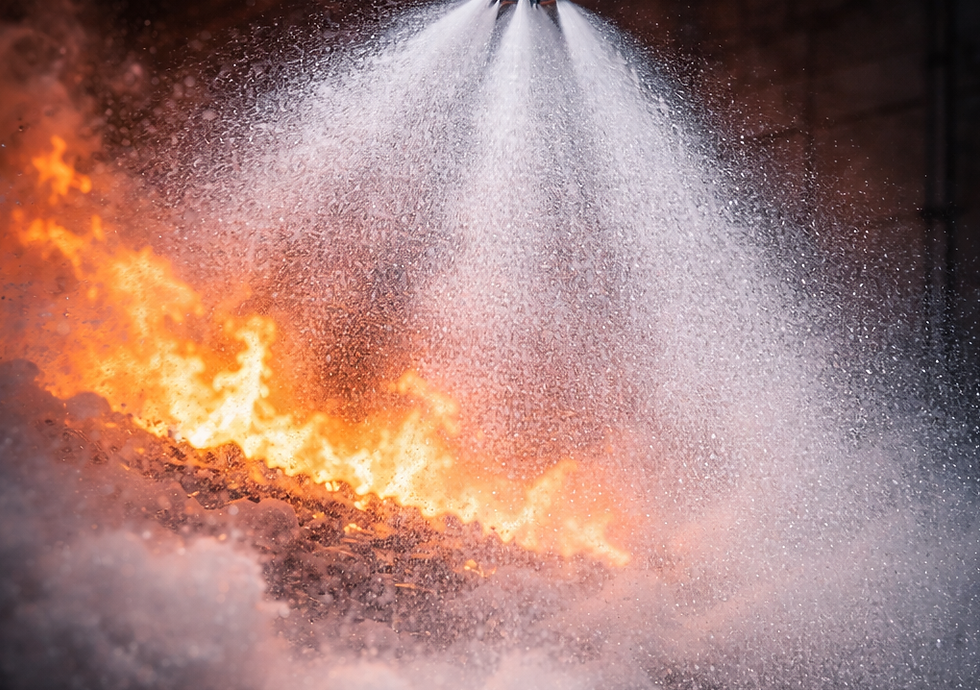
Residential water mist systems are designed to discharge fine water droplets to help control a fire under the conditions for which the system has been designed and tested.
Depending on the system and application, water mist can help control fire growth, cool the fire and surrounding surfaces, and reduce the spread of heat. Its performance depends on factors including nozzle design, water supply, system configuration, the fire scenario and the relevant testing.
For homeowners, developers and architects, water mist may be worth considering where additional automatic fire suppression forms part of an appropriate fire safety strategy.
However, it is important to recognise that no single fire protection measure is suitable for every building or every type of fire. A domestic water mist system should not automatically be assumed suitable for solar-panel fires, lithium-ion battery incidents or other specialist hazards unless its suitability has been established for the specific application.
When should fire suppression be considered?
Fire suppression may be considered during a new-build project, a loft conversion, a major renovation or the assessment of an existing property. The decision should reflect the property's design, occupancy, risk assessment and applicable requirements.
For developers and architects, early consideration can help coordinate system design with other building services and avoid unnecessary changes later in the project.
For homeowners, it provides an opportunity to understand the available options and how additional protection could complement alarms, escape planning and other fire safety measures.
Fire Mist Solutions specialises in residential and domestic fire mist systems. If you're considering additional fire protection for a property, explore our residential and domestic fire mist systems or speak to our team about your project.
What do the latest house fire statistics tell us?
The latest official figures show that dwelling fires in England increased by 2.8% in the year ending March 2026. However, they remained 17% below the level recorded ten years earlier. Over the same period, the number of fire-related fatalities in dwellings fell by 19%.
These findings suggest that the long-term picture is more encouraging than the latest annual increase might initially imply. At the same time, the number of residential fires and their consequences demonstrate why fire safety remains an important consideration for every property.
Ready to Protect Your Property?
Get a free, no-obligation quote for a water mist fire suppression system tailored to your property.
Fire Mist Solutions Team
Specialist water mist fire protection — South Wales & UK
info@FireMistSolutions.com · 01685 376150

Comments