
Why Water Mist Is the Future of Home Fire Protection in the UK
- Chris Sullivan
- Apr 21
- 6 min read
Traditional sprinklers served us well for decades. But a new generation of fire suppression technology is changing everything — using 70% less water and causing almost zero damage to your home.
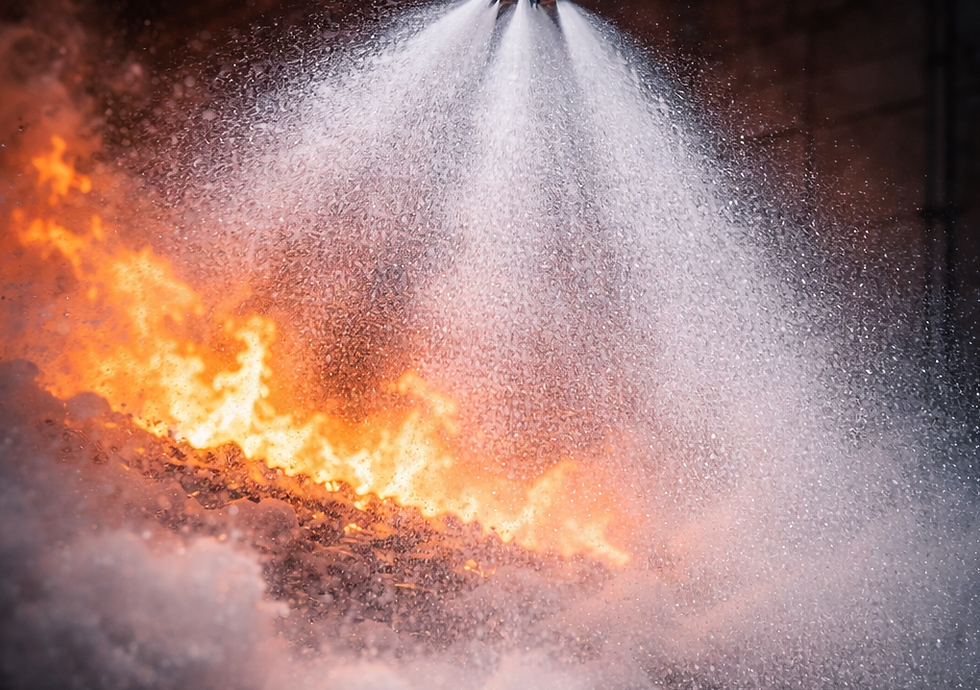
If you’re building a new home in Wales, converting a loft, or managing an HMO anywhere in the UK, fire suppression probably isn’t the most exciting thing on your mind. But it’s one of the most important. And the technology you choose today will determine how well your property — and the people in it — are protected for decades to come.
For years, traditional fire sprinkler systems have been the default. They work, and they’ve saved countless lives. But they come with well-known drawbacks: large water tanks, significant water damage when activated, visible ceiling-mounted heads, and costly installation that often requires major pipework modifications.
Water mist technology changes all of that. And in 2026, with UK fire safety regulations tightening across England, Scotland, and Wales, it’s rapidly becoming the preferred choice for homeowners, developers, and architects alike.
What Exactly Is a Fire Mist System?
A water mist fire suppression system works on the same fundamental principle as a traditional sprinkler: when heat from a fire is detected, water is released to suppress it. But that’s where the similarity ends.
Instead of drenching a room with large volumes of water through a conventional sprinkler head, a water mist system forces water through precision-engineered nozzles at high pressure, creating an ultra-fine mist of micro-droplets. These tiny droplets — much smaller than rain — work in three ways simultaneously:
Cooling: The massive surface area of the micro-droplets absorbs heat from the fire and surrounding air far more efficiently than conventional water streams.
Oxygen displacement: As the tiny droplets evaporate, they expand into steam, displacing the oxygen around the fire and effectively suffocating it.
Radiant heat blocking: The mist creates a barrier between the fire and surrounding materials, slowing fire spread and protecting escape routes.
The result? Fires are suppressed faster, with dramatically less water, and with almost none of the secondary water damage that traditional sprinklers are notorious for.
70%
Less water used vs traditional sprinklers
3x
More effective heat absorption per litre
90%
Reduction in fire deaths when systems are present
Why This Matters Now: UK Regulations Are Tightening
The UK regulatory landscape for fire safety has changed profoundly since the Grenfell Tower tragedy in 2017. The Building Safety Act 2022, the Fire Safety Act 2021, and ongoing amendments to Approved Document B have all strengthened requirements for fire suppression in residential buildings.
Here’s where things stand in 2026:
Region | What’s Required | Key Detail |
Wales | Fire suppression mandatory in all new residential buildings | In force since 2016 — the strictest requirement in the UK. Applies regardless of building height. |
England | Sprinklers mandatory in residential buildings over 11m | In force since 2020. New 2026 amendments add evacuation plan requirements and second staircases for buildings over 18m. |
Scotland | Required in flats, social housing, care homes, and schools | Broad coverage under Building (Scotland) Regulations Standard 2.15. |
Important for Wales: If you’re building any new home in Wales — whether it’s a single house, a flat, or a large development — fire suppression isn’t optional. It’s a legal requirement. Water mist systems that conform to BS EN 14972-17:2025 are accepted as a compliant alternative to traditional sprinklers under BS 9251.
Beyond these mandatory requirements, fire suppression is also commonly needed for loft conversions (where escape routes change), HMO licensing, open-plan ground floor layouts, and care home compliance. In all of these scenarios, water mist systems offer a practical, less disruptive alternative to traditional sprinklers.
Water Mist vs Traditional Sprinklers: The Real Differences
The comparison between mist and conventional sprinklers isn’t just theoretical. It has real, practical implications for your property, your budget, and your peace of mind.
Water Usage and Damage
Traditional sprinklers typically release 50–100 litres of water per minute through each activated head. That’s effective at fighting fire, but it can cause devastating water damage to floors, furnishings, electronics, and the building structure itself. In some cases, the water damage from sprinkler activation rivals the fire damage.
Water mist systems use a fraction of that — typically 70% less water. Because the droplets are so fine, they evaporate rapidly during fire suppression, leaving surfaces far drier. This is particularly important for protecting valuable items, heritage interiors, and modern open-plan living spaces.
Installation
Conventional sprinkler systems often require large water storage tanks (particularly where mains pressure is insufficient), extensive ceiling-mounted pipework, and significant structural modifications. For existing homes, this can be hugely disruptive.
Water mist systems typically use smaller-diameter pipes, compact pump units, and can often connect directly to existing mains water supplies without the need for a large storage tank. This makes them far better suited to retrofits, loft conversions, and period properties where minimising disruption is essential.
Aesthetics
Let’s be honest — nobody wants an industrial-looking sprinkler head on their bedroom ceiling. Modern mist nozzles are significantly smaller and more discreet than traditional sprinkler heads. Some systems offer wall-mounted options that are barely visible, preserving the look and feel of your home.
Effectiveness
Research by the Building Research Establishment (BRE) estimates that automatic fire suppression systems reduce deaths by approximately 90% and injuries by around 60% in residential settings. Water mist systems achieve this while addressing all three sides of the “fire triangle” — heat, oxygen, and fuel — simultaneously, making them exceptionally effective at preventing fire spread and re-ignition.
Who Benefits Most from Water Mist?
Water mist technology is relevant across a wide range of property types, but certain groups stand to benefit most:
Homeowners in Wales who need to comply with mandatory fire suppression requirements in the most practical, least disruptive way possible.
Loft conversion projects where building control requires fire suppression as a condition of approval, but traditional sprinklers would be impractical to install.
HMO landlords who need compliant fire protection systems for licensing, with minimal disruption to tenants and maximum property protection.
Developers building new homes who want a cost-effective, space-efficient suppression solution that doesn’t require large water tanks.
Care home operators protecting vulnerable residents in environments where rapid, low-disruption fire suppression is critical.
Heritage and listed building owners who need discreet fire protection that doesn’t compromise the character of their property.
The Standards: BS EN 14972-17:2025 and What It Means
In the UK, water mist systems for residential and domestic use are designed and installed to BS EN 14972-17:2025 — the British Standard code of practice for water mist systems in residential settings. This standard sets out requirements for system design, water supply, nozzle placement, activation, and maintenance.
BS EN 14972-17:2025 is recognised by building control bodies across England, Wales, and Scotland as a compliant route to meeting fire suppression requirements. The Welsh Government has specifically published guidance confirming that water mist systems designed to BS EN 14972-17:2025 are acceptable alternatives to sprinkler systems designed to BS 9251.
It’s worth noting that the regulatory landscape continues to evolve. The introduction of BS EN 14972-17:2025 brings stricter European testing standards for residential water mist systems. Working with a specialist installer who stays current with these changes is essential to ensure your system will pass building control scrutiny both today and in the future.
What to Look for in a Water Mist Installer
Not all water mist providers are equal. When choosing an installer, look for:
Specialist focus: Companies that specialise in water mist (rather than offering it as one option among many) tend to have deeper expertise and more reliable installations.
Accreditations: Look for membership of the Fire Industry Association (FIA), relevant British Standard compliance, and quality certifications.
Design capability: Your installer should be able to design a bespoke system based on your floor plans, not just quote from a generic template.
Building control experience: They should have a track record of systems being signed off by building control bodies, particularly in your region.
Ongoing maintenance: A system is only as good as its servicing. Annual maintenance should be offered and clearly priced.
Looking Ahead: The Future of Fire Safety
The trend is clear. UK fire safety regulations will continue to tighten. The April 2026 implementation of new residential evacuation plan requirements, the September 2026 second-staircase mandate for high-rise buildings, and the ongoing work of the Building Safety Regulator all point in one direction: more fire protection, applied to more buildings, with higher standards of compliance.
Water mist technology is ideally positioned for this future. It’s more efficient, less disruptive, more environmentally sustainable, and increasingly the technology of choice for architects, developers, and building control professionals who understand where fire safety is heading.
Whether you’re planning a new build in Cardiff, converting a loft in Swansea, or managing an HMO in Bristol, the question isn’t whether you need fire suppression — it’s which technology gives you the best protection with the least compromise.
For a growing number of UK property owners, the answer is water mist.
Ready to Protect Your Property?
Get a free, no-obligation quote for a water mist fire suppression system tailored to your property.
Firemist Solutions Team
Specialist water mist fire protection — South Wales & UK
info@FireMistSolutions.com · 01685 376150
Comments